vi
vi


CAN THO – CA MAU EXPRESSWAY FACES SUBSIDENCE: THE CHALLENGE OF MEKONG DELTA'S "MUD POCKETS" AND BREAKTHROUGH SOLUTIONS FROM OKASAN LIVIC EPS
The Can Tho – Ca Mau Expressway, a key national project, has recently reported significant subsidence at several bridge approaches. This is not just a matter of construction pace, but a complex geotechnical puzzle of the Mekong Delta's soft soil. Okasan Livic Vietnam provides the answer with EPS (Expanded Polystyrene) Geofoam—a technology designed to eliminate subsidence concerns.
1. The Current Situation: "Bumps" on a Billion-Dollar Route
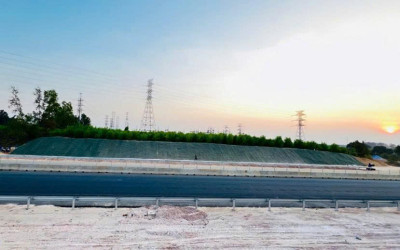
According to reports from VnExpress, shortly after opening to traffic, many road sections leading to bridge abutments (such as Cai Lon, Xeo Lop 1, and Nuoc Duc bridges) on the Can Tho – Ca Mau Expressway have shown subsidence of 4 - 5 cm.
The Consequence: Vehicles must abruptly decelerate to avoid heavy jarring, compromising safety and increasing travel time.
The Root Cause: The expressway traverses areas with thick layers of soft clay and mud with extremely low bearing capacity. Despite traditional sand surcharging, the long "settlement waiting time" and the massive weight of the sand fill continue to exert excessive pressure on the underlying soft soil.
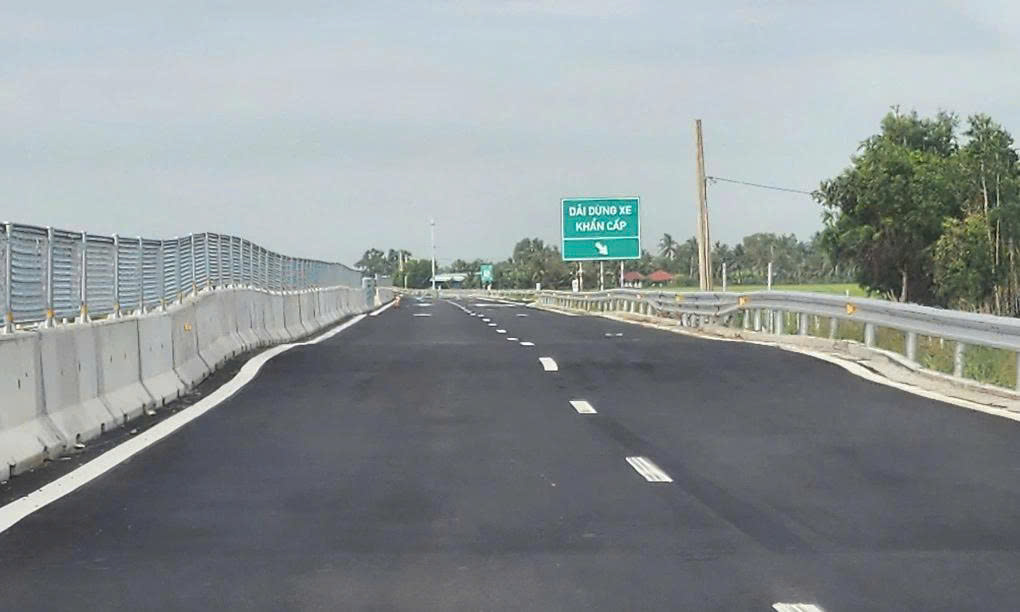
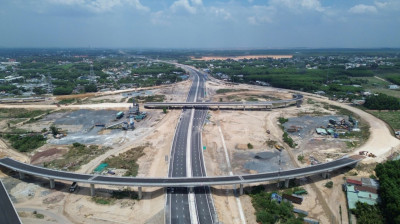
Real-life photo of subsided road-bridge transition zones on the Can Tho - Ca Mau Expressway]
2. Why Traditional Methods Are Falling Short
Traditional sand filling faces two major hurdles:
Massive Weight: Sand is heavy; the higher the fill, the deeper it sinks into the mud layer.
Time Constraints: It requires 6–12 months for the soil to stabilize, significantly delaying project completion.
3. Okasan Livic EPS – An "Ultra-Lightweight" Solution for "Ultra-Deep" Subsidence
To radically solve this issue, especially at critical bridge approaches and ramp transitions, the EPS Geofoam solution from Okasan Livic Vietnam is the most optimal choice today.
The power of EPS lies in the numbers:
Ultra-Lightweight: Only 1% to 2% the weight of traditional soil or rock. Instead of dumping tons of sand onto "mud pockets," we install EPS blocks that are "light as air," virtually eliminating vertical pressure on soft ground.
High Compressive Strength: Reaching 60 – 150 KPa, ensuring durability for heavy-duty traffic, including containers and large trucks.
High-Speed Construction: EPS blocks are pre-molded and installed in a modular fashion. No waiting for settlement is required; asphalt paving can begin immediately after installation.
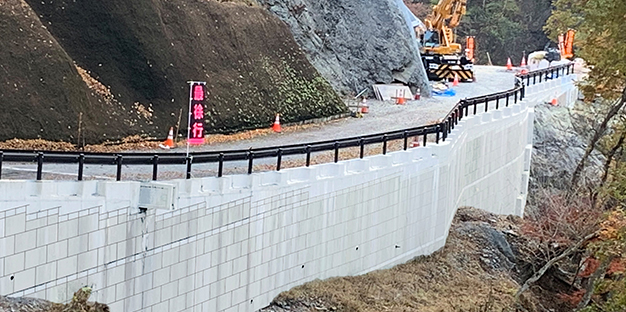
Photo of white EPS blocks systematically layered at a highway construction site
4. Strategic Application of EPS in Expressway Projects
Okasan Livic recommends applying EPS at the most vulnerable points of the Can Tho – Ca Mau Expressway:
Bridge Approaches: Completely eliminates the settlement differential between the rigid bridge structure and the flexible road embankment.
High Embankments: Reduces the load on steep slopes, preventing embankment sliding.
Deep Mud Zones: Replaces a portion of the soil fill to maintain long-term global stability.
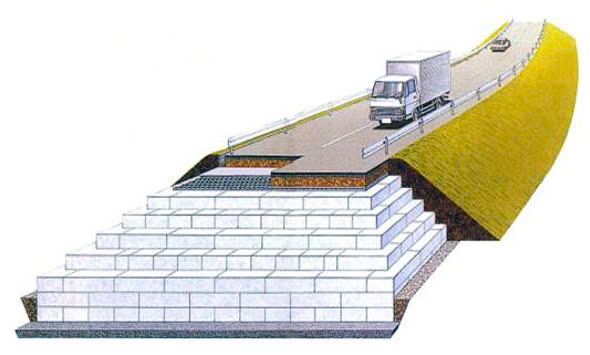 | 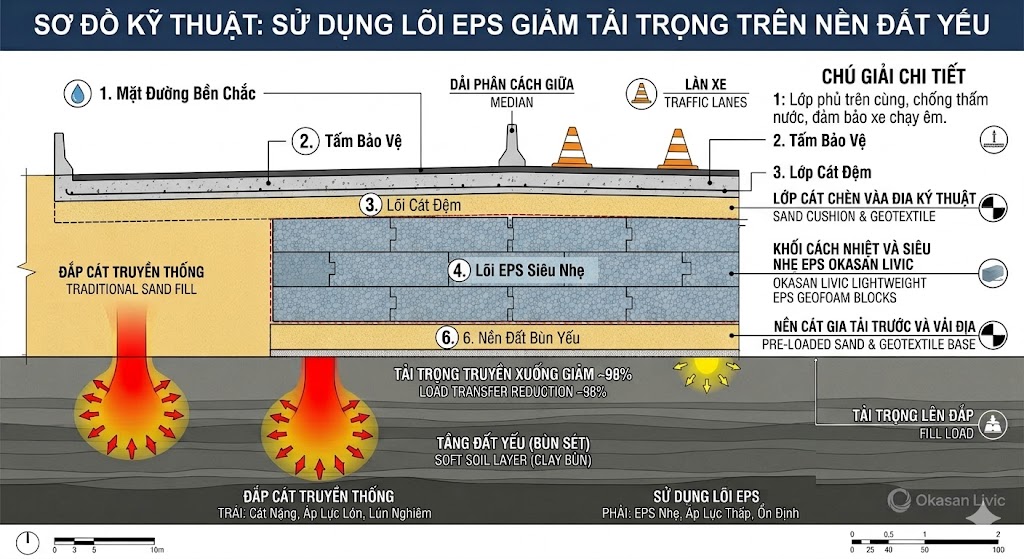 |
Redesigned Technical Diagram: Cross-section of an expressway using an EPS core to reduce load on soft soil]
5. Okasan Livic Vietnam – Japanese Quality for Vietnam's Infrastructure
We provide more than just high-quality EPS; we offer comprehensive technical consultancy and supervision:
Eternal Durability: EPS does not decompose, is water-resistant (absorption rate <3%), and lasts over 50 years.
Cost Efficiency: Reduces expensive foundation treatment costs and annual maintenance/repair fees caused by subsidence.
Conclusion: The subsidence at the Can Tho – Ca Mau Expressway is a reminder of the need for innovative technologies. With Okasan Livic EPS, we are committed to building roads that are not just fast, but SMOOTH and SUSTAINABLE.
CONTACT US FOR TECHNICAL SOLUTIONS:
📍 OKASAN LIVIC VIETNAM CO., LTD.
🏢 4th Floor, 119-121 Ung Van Khiem, Ward 25, Binh Thanh Dist., HCMC
📞 Hotline: 0938 841 015
🌐 Website: www.okasanvietnam.com
✉️ Email: okvn_sale@okasanvietnam.com.vn