vi
29/09 2026


Solutions for Addressing Subsidence and Lateral Sliding of Road Embankments on Soft Soil Near Rivers: Perspectives from the Incident on the Bien Hoa – Vung Tau Expressway
1. Actual Site Conditions at the Bien Hoa – Vung Tau Expressway (Section near the Buong River)
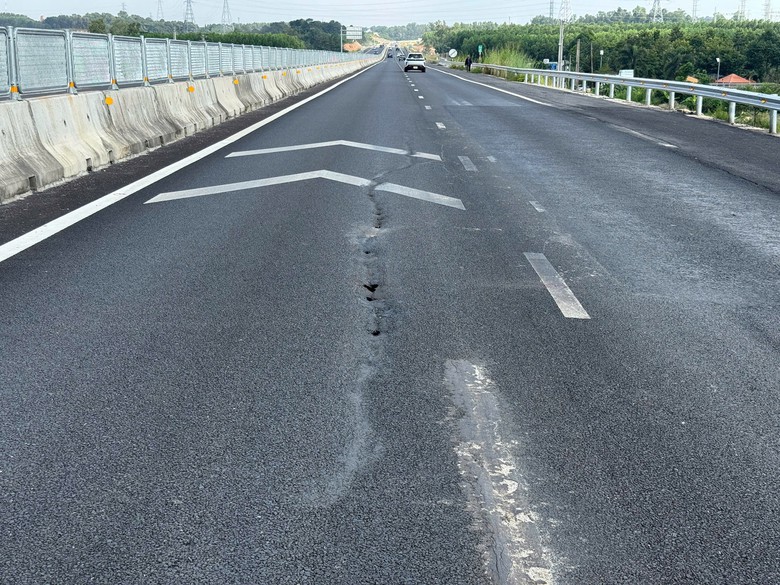
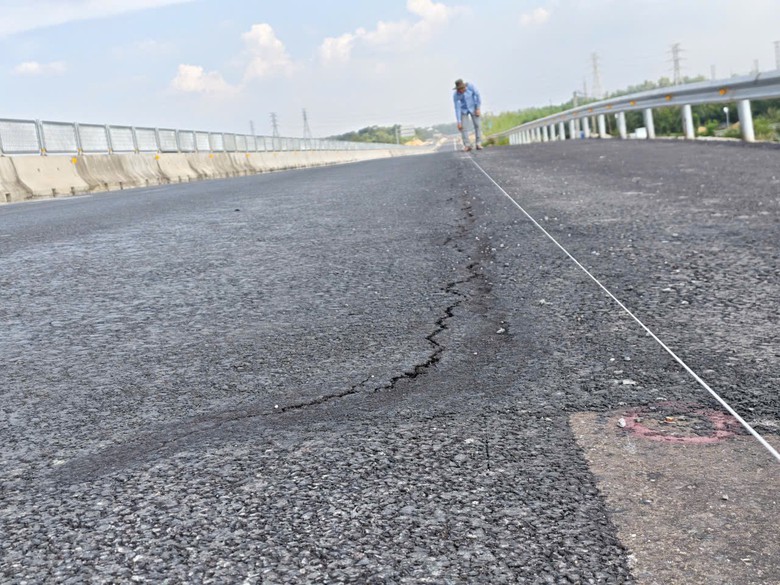
Observations at the site of Component Project 1 of the Bien Hoa – Vung Tau Expressway (passing through Phuoc Tan Ward, Bien Hoa City, Dong Nai Province—an area adjacent to the Buong River) reveal that the route is facing complex geotechnical challenges:
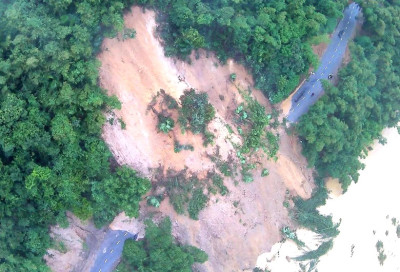
Signs of damage: The road surface exhibits extensive cracking and localized sinkholes or depressions; the road embankment shows signs of subsidence and tilting toward the Buong River. The side slopes have fractured, and the toe of the embankment has developed undercuts (hollowed-out sections) due to erosion from water flow.
Root causes: This area features naturally weak soil. The construction of a high embankment increases both vertical and lateral pressure on the underlying soil layers. During prolonged heavy rainfall, the rising water level of the Buong River saturates the foundation soil, reducing its shear strength and triggering lateral sliding and differential settlement toward the riverbed.
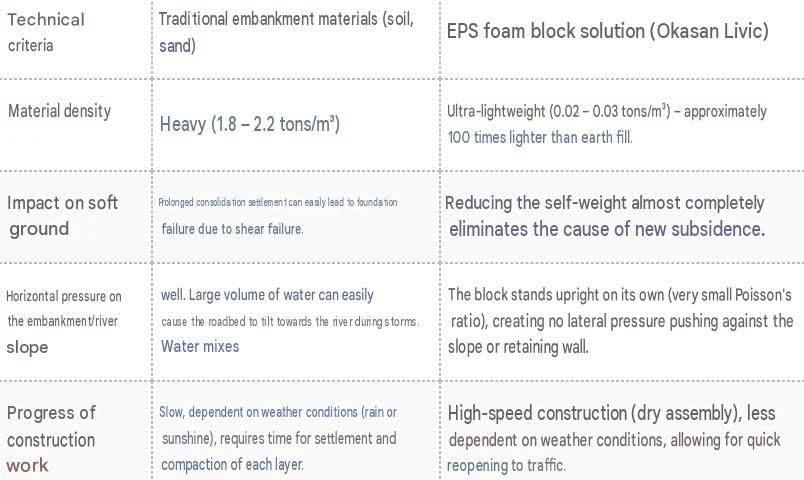
Under such sensitive geological conditions, continuing to use traditional fill materials (such as soil, sand, or rock—which have high densities ranging from 1.8 to 2.2 tons/m³) for leveling or reinforcement will only add further weight to the weak foundation soil. This is highly likely to lead to recurring subsidence or deep-seated slope instability.
2. Ultra-lightweight EPS Road Embankment Solution from Okasan Livic Vietnam

To effectively address the challenges of reducing the load on weak subsoils and eliminating lateral earth pressure pushing toward riverbanks, Okasan Livic Vietnam Co., Ltd.—a pioneer in transferring Japanese geotechnical technology to Vietnam—offers a road embankment construction solution using ultra-lightweight Expanded Polystyrene (EPS) geofoam blocks.
The technology of constructing embankments with EPS blocks has been standardized in Japan and widely applied since the 1980s across thousands of projects, including expressways, bridge approach roads, and routes along rivers and coastlines with complex geological conditions.
Core Operating Principle
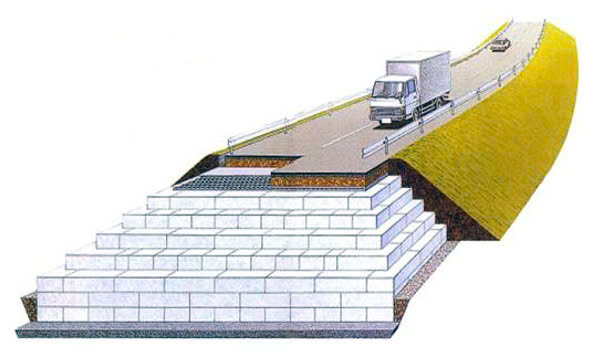
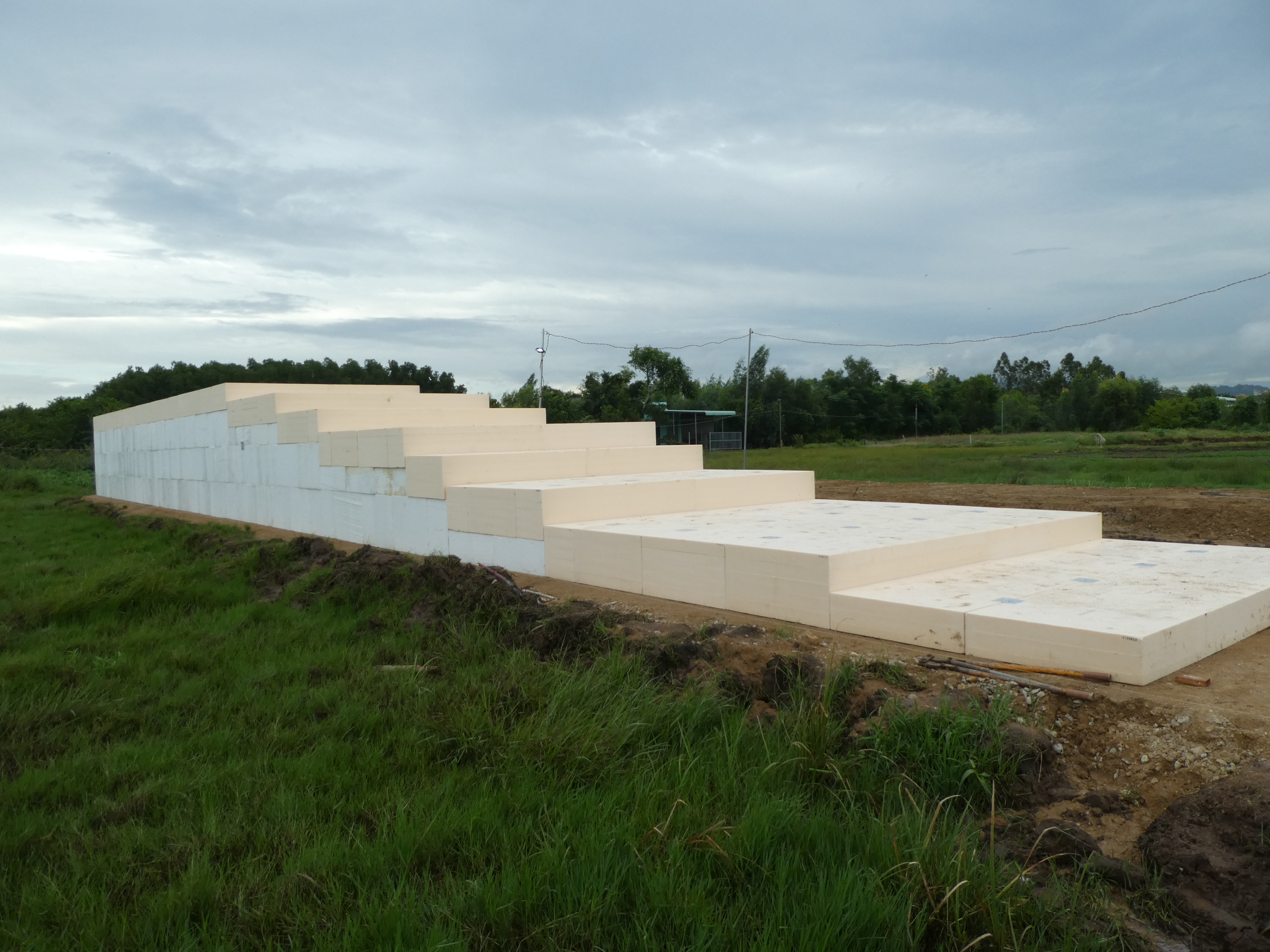
Instead of using heavy soil or rock fill, the core of the road embankment (or the fill section requiring replacement in areas prone to subsidence) is constructed using high-compressive-strength EPS foam blocks. These blocks are stacked tightly together, secured with specialized connectors, and protected externally by a reinforced concrete load-distribution slab, topped with a layer of soil or the road pavement structure.
3. Key Advantages of the EPS Solution for Addressing Riverbank Instability
Applying Okasan Livic Vietnam’s EPS technology to road sections—such as those near the Buông River—provides four distinct technical and economic benefits:
Japanese-standard design consulting: Precise calculation of overall sliding stability, with buoyancy control—managed via subsurface drainage systems and concrete counterweight slabs—to account for rising water levels in the Buong River.
Specialized EPS materials for infrastructure: Provision of EPS foam blocks that meet rigorous technical standards for compressive strength, long-term durability under the dynamic loads of heavy trucks, and resistance to chemicals and moisture within the soil environment.
Integrated solutions: Easily combined with riverbank toe-protection systems or vertical retaining walls to minimize the project’s footprint and prevent encroachment into the river channel.
4. Conclusion
The cracking, tilting, and settlement of the roadbed on the Bien Hoa – Vung Tau expressway, near the Buong River, serve as a stark reminder of the risks associated with constructing high embankments on weak, riverfront soil—especially under extreme weather conditions. In addition to measures for reinforcing road-base embankments and completing surface drainage systems, the EPS (expanded polystyrene) lightweight road-base solution offered by Okasan Livic Vietnam serves as an optimal, sustainable technical choice—one that significantly minimizes repair time while ensuring long-term operational safety for critical transport infrastructure projects.
Other articles