vi
23/10 2026


TAKINO Filter: A Sustainable Solution for Erosion Control and Vegetation Restoration
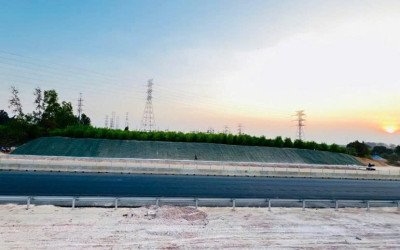
In transport infrastructure, land leveling, and urban development projects, slope erosion caused by heavy rain and flooding remains a persistent challenge for engineers and project owners. Recognizing this, TAKINO Filter—a high-quality non-woven fabric from Japan—offers an optimal solution based on the philosophy: "Protect the soil first, nurture the greenery later."
1. Overview of TAKINO Filter
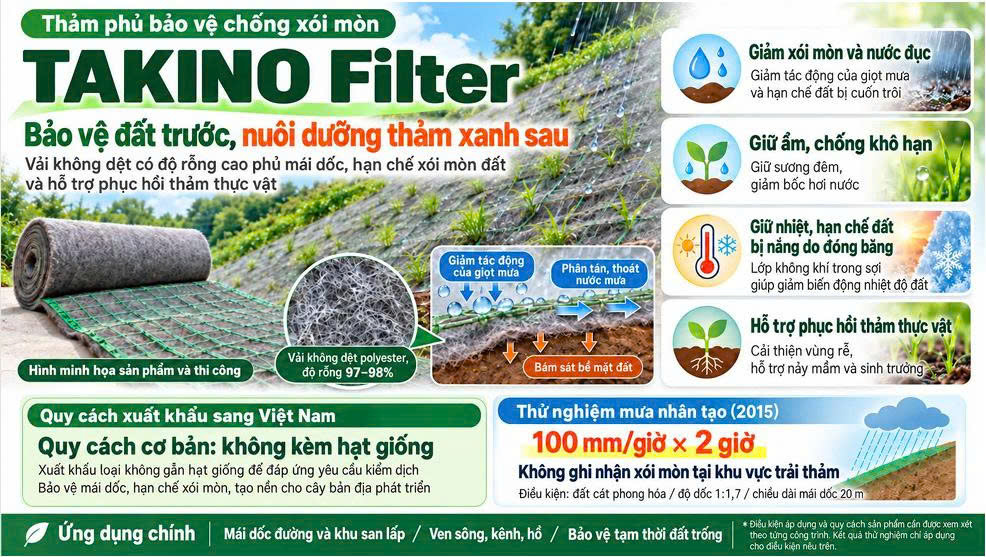
TAKINO Filter is a non-woven fabric mat made from polyester, featuring an exceptionally high porosity of 97% to 98%.
Export specifications for Vietnam: The product is exported in its base form—without seeds—to fully comply with phytosanitary (plant quarantine) requirements.
Proven effectiveness through testing: In artificial rainfall tests (with an intensity of 100 mm/hour for 2 hours, conducted on weathered sandy soil with a 1:1.7 slope gradient and a slope length of 20 meters), no erosion was observed in areas covered with the mat.
2. Optimal mechanism for soil protection and restoration
Thanks to its unique fiber structure, TAKINO Filter serves a dual purpose: providing immediate protection for the soil surface while creating an ideal environment for native vegetation to thrive:
Mitigating the impact of raindrops: The mat disperses rainwater and facilitates effective drainage. By adhering closely to the soil surface, it minimizes soil washout and the formation of turbid runoff.
Retaining moisture and preventing desiccation: The mat captures night dew and reduces evaporation, helping to maintain soil moisture during dry spells. Soil temperature regulation: The layer of still air trapped within the mat fibers minimizes temperature fluctuations, retains heat, and protects the soil from damage caused by low temperatures or freezing.
Support for vegetation recovery: It improves the microclimate in the root zone, creating favorable conditions for seed germination and robust plant growth.
 |  |
3. Practical Applications in Vietnam and Japan
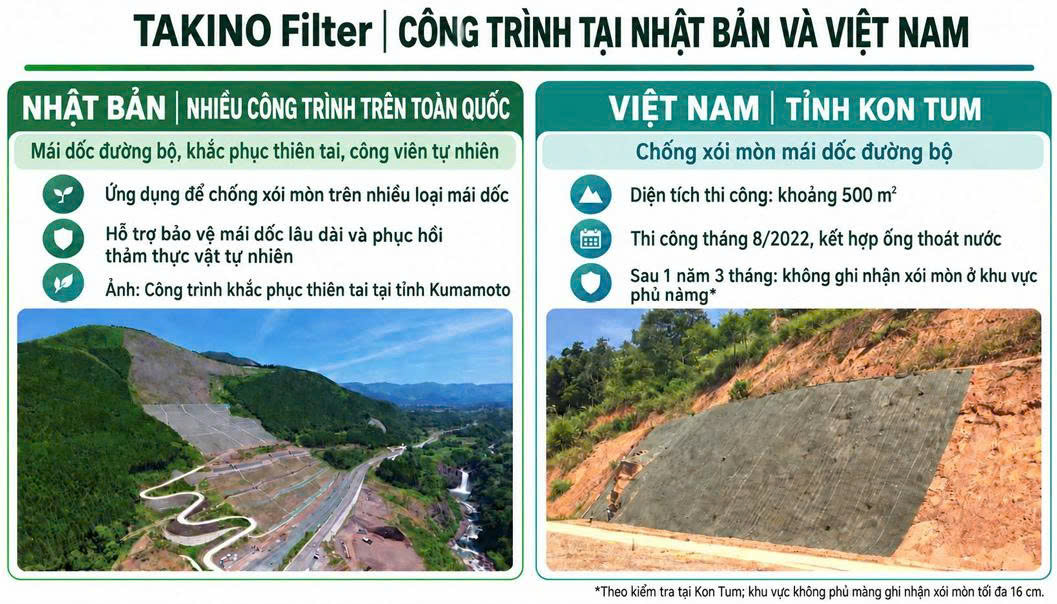
TAKINO Filter is widely trusted for use in transportation projects and disaster recovery efforts in Japan (such as projects in Kumamoto Prefecture). It is also designed for versatile application across various regions in Vietnam:
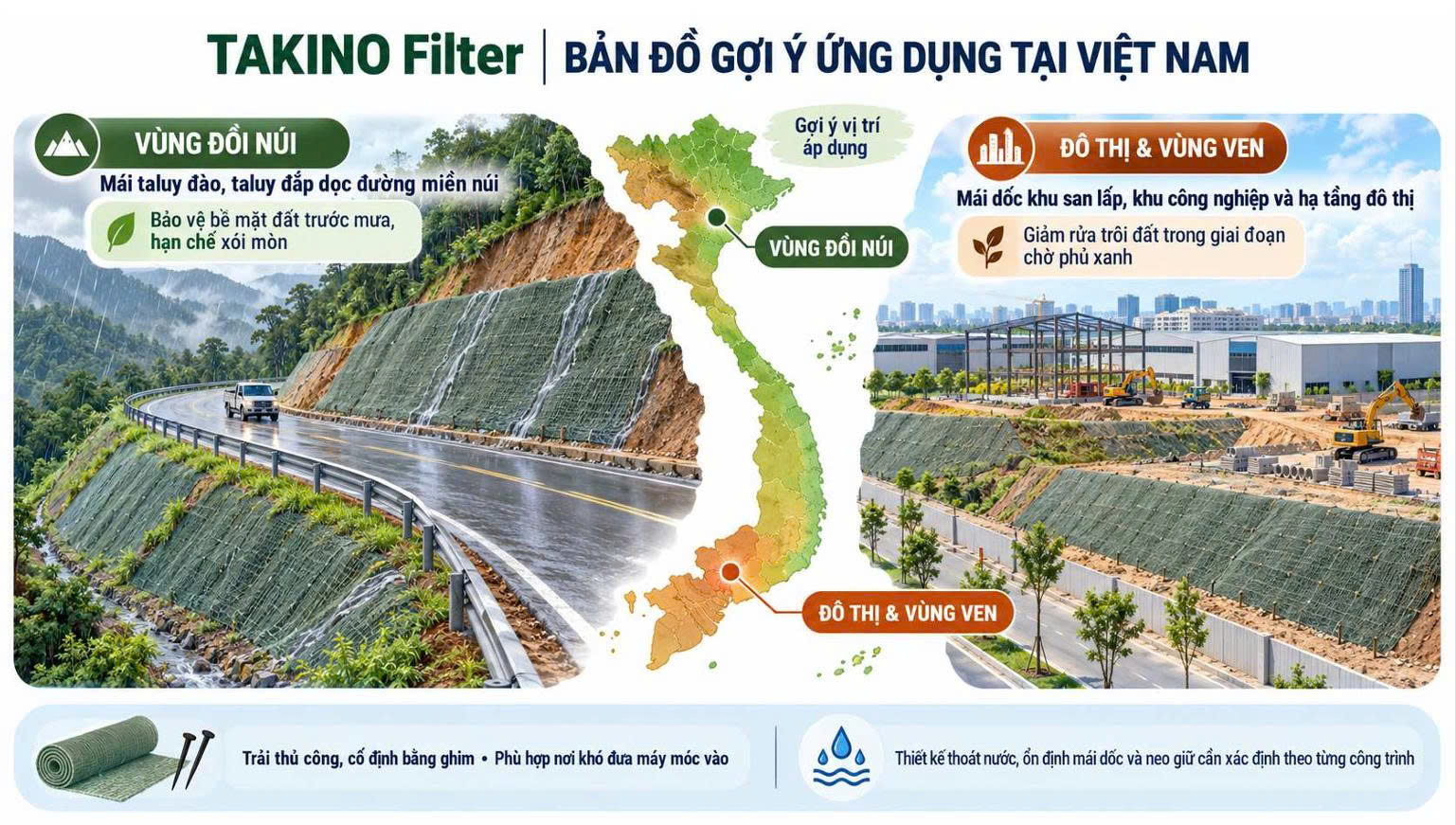
Mountainous areas: Applied to cut and fill slopes along mountain roads, it protects the soil surface during the rainy season and mitigates erosion.
Urban and suburban areas: Used on slopes at land-clearing sites, industrial zones, and urban infrastructure projects, it helps minimize soil washout while awaiting the establishment of permanent vegetation.
Real-world examples: In Kon Tum Province (Vietnam), an erosion control project covering approximately 500 m² of roadside slopes—implemented in August 2022 and incorporating drainage pipes—demonstrated exceptional results. After 15 months, the area covered by the mat showed no erosion, whereas the unprotected control area experienced up to 16 cm of soil loss.
4. Simple Installation Process (No Heavy Machinery Required)
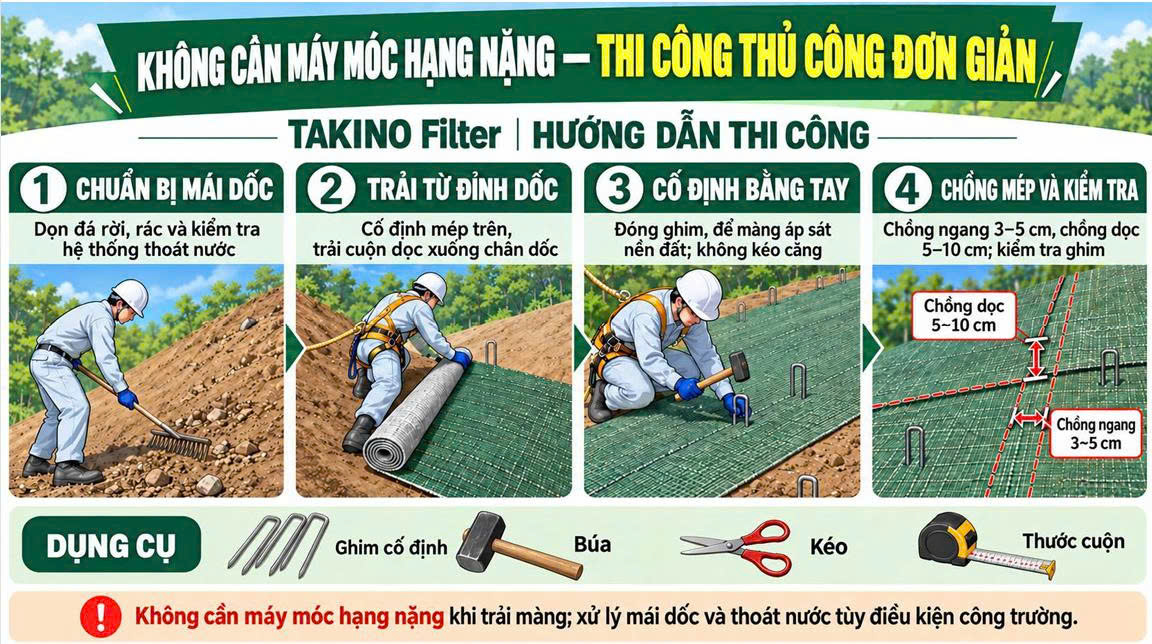
A key advantage of the TAKINO Filter is its highly flexible, manual installation process, making it particularly well-suited for rugged terrain where heavy machinery cannot easily gain access.
Required tools: Securing pins, a hammer, scissors, and a measuring tape. 4-Step Installation Process:
Slope Preparation: Clear away loose rocks and debris, and inspect the drainage system.
Unrolling from the Crest: Secure the top edge, then unroll the material down the slope.
Manual Securing: Use pins to fasten the material firmly against the ground (note: do not stretch the material).
Overlapping and Inspection: Overlap horizontal edges by 3–5 cm and vertical edges by 5–10 cm, then conduct a thorough inspection of all pins.
Note: Specific application conditions, drainage design, and anchoring methods should be evaluated in detail based on the requirements of each individual project.
Contact us today for detailed consultation on the TAKINO Filter solution for your project!
Other articles